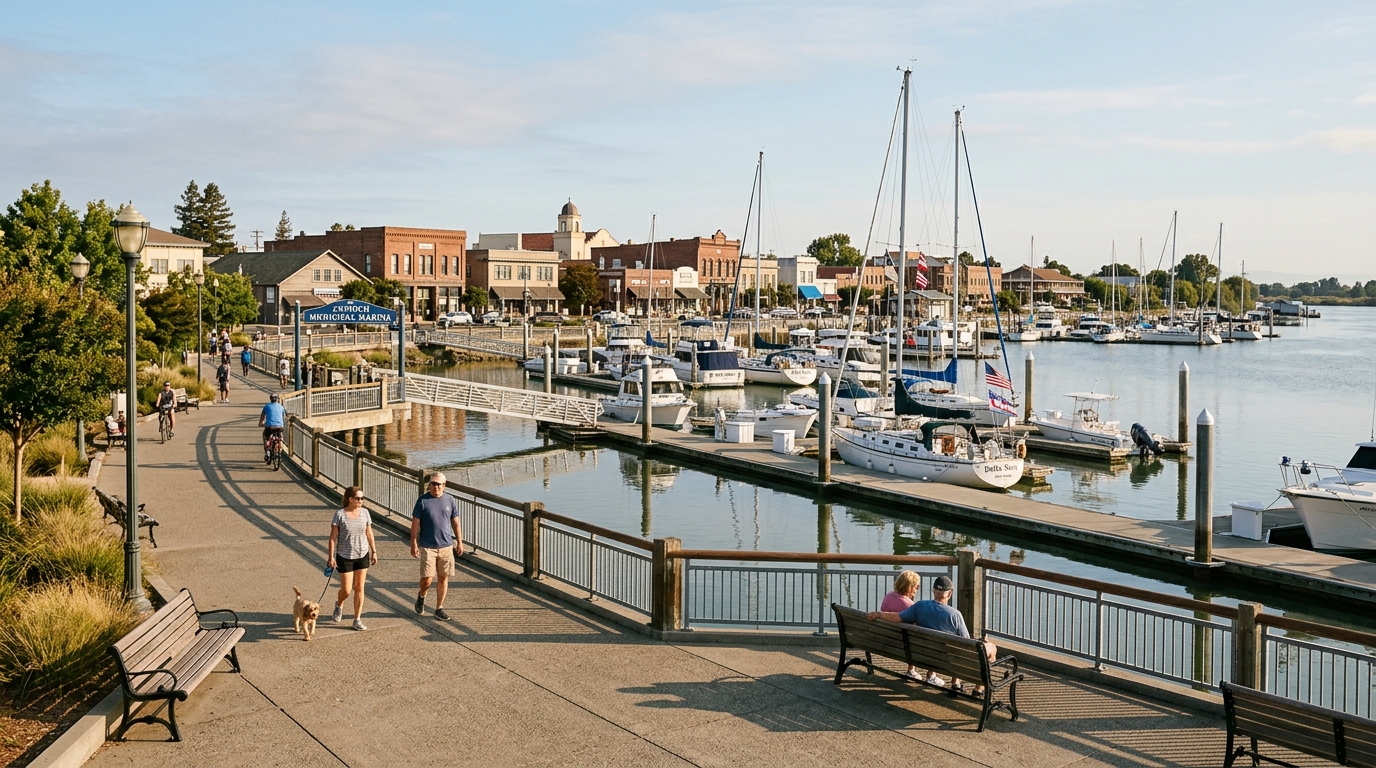
Antioch’s waterfront is one of the city’s most distinctive local assets. Historic Rivertown sits beside the San Joaquin River, where marina views, public gathering spaces, older commercial blocks, and Delta breezes create a side of Antioch that many Highway 4 commuters never stop to explore. It is not a polished resort district, and that is part of its appeal. A good visit is less about rushing through a checklist and more about walking slowly, supporting a local business, and noticing how the city’s past and future meet along the shoreline.
The waterfront is also receiving renewed attention in 2026 as residents and city leaders debate what downtown public space and redevelopment should look like. That makes this an especially useful time to visit. Seeing Rivertown in person provides context that online debate cannot. Whether you are a longtime resident, a newcomer, or a Bay Area visitor looking for an easy local outing, this guide will help you build a relaxed half-day or full-day itinerary.
Plan a Waterfront Day in Historic Rivertown
The easiest way to enjoy Rivertown is to divide the day into three parts: the marina and riverfront in the morning, downtown streets and local businesses around midday, and a slower return to the water in the late afternoon. Starting early is especially helpful during hotter months, when parking may be easier and the waterfront feels calmer.
Start at Antioch Marina and the River
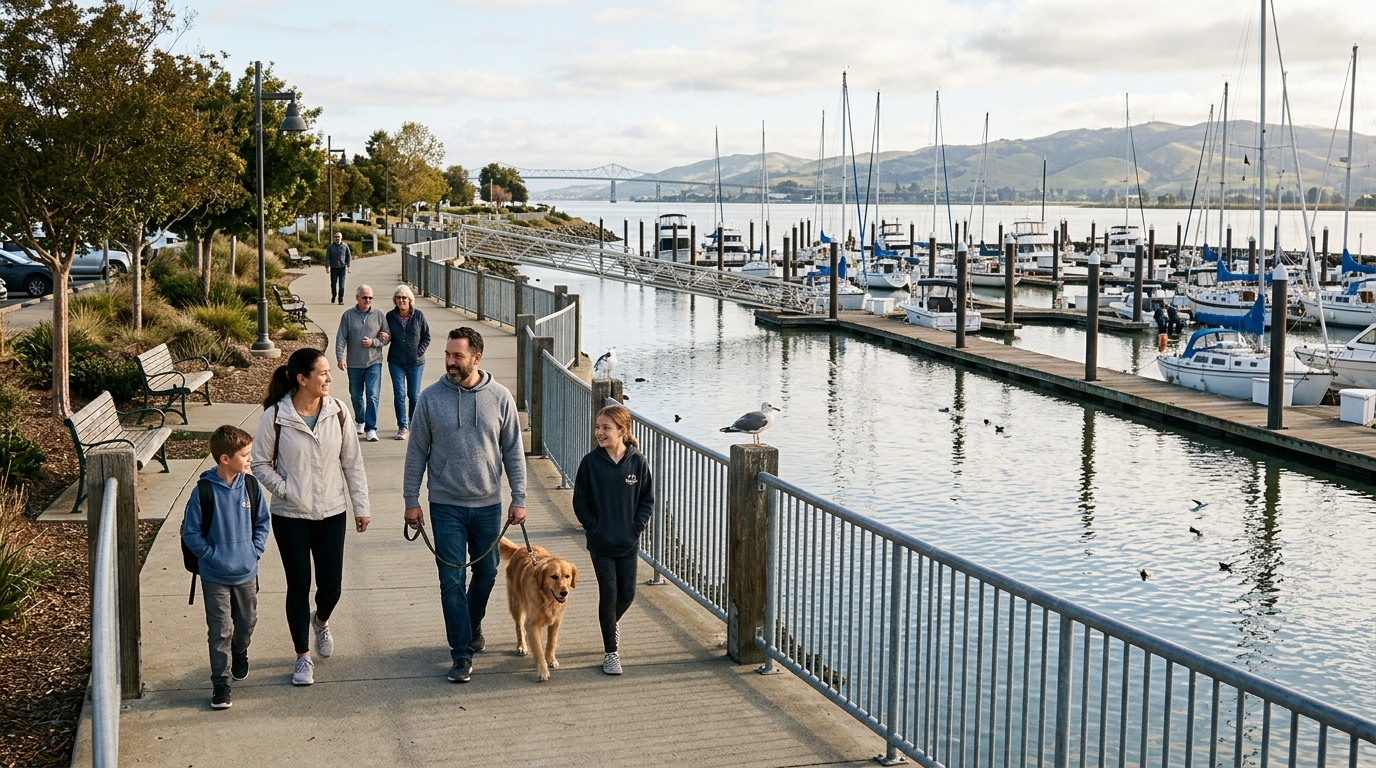
Begin near Antioch Marina at the foot of L Street. The marina is both a working boating facility and a useful orientation point for the waterfront. Boats, docks, open water, and the broad Delta landscape make this part of Antioch feel different from the inland corridors farther south.
Visitors who are not boating can still enjoy the setting. Look across the river, watch activity around the slips, and photograph the waterfront without blocking marina operations. Conditions can change quickly near open water, so bring a light layer even on a warm day. A hat, water bottle, sunscreen, and comfortable walking shoes make the rest of the itinerary easier.
Take a Slow Morning Walk Along the Waterfront
Rather than treating the waterfront as a single attraction, approach it as a connected landscape. Walk toward the public areas near downtown, pause at viewpoints, and look back toward the marina. The most interesting scenes are often simple: boats returning to their slips, birds along the shoreline, and families using open spaces near the river.
Allow at least 45 minutes for an unhurried walk. Keep young children close near waterfront edges, docks, and active parking areas, and share narrow sections carefully. If mobility is a concern, preview the route and choose shorter segments near accessible parking.
This is also a good time to notice the physical character of Rivertown. Older buildings, civic spaces, working waterfront elements, and newer improvements sit close together. The area does not present one perfectly consistent design, but that mix tells the story of a river city that has repeatedly adapted to changing industries and transportation patterns.
Know the Basics Before Boating or Fishing
Boaters should verify current marina procedures before arriving. The City of Antioch lists the marina at 5 Marina Plaza and currently posts office hours from Tuesday through Saturday, 7 a.m. to 4 p.m. Transient boaters can use the reservation option linked by the city, while long-term berth availability is handled directly by the marina office.
The marina also has a boat launch ramp. The city’s current FAQ lists a $5 launch charge for vehicles with trailers, with a self-pay station on site and each permit valid for 24 hours. Fees, office schedules, water conditions, and access rules can change, so confirm details on the official Antioch Marina page before making a special trip.
Anyone planning to fish should check California licensing requirements, posted rules, weather, tides, and safe access. Do not assume that every section of shoreline allows the same activity. Bring all trash out with you, secure loose fishing line, and avoid leaving hooks or bait containers where wildlife, pets, or other visitors could encounter them.
Explore Downtown Rivertown Beyond the Water
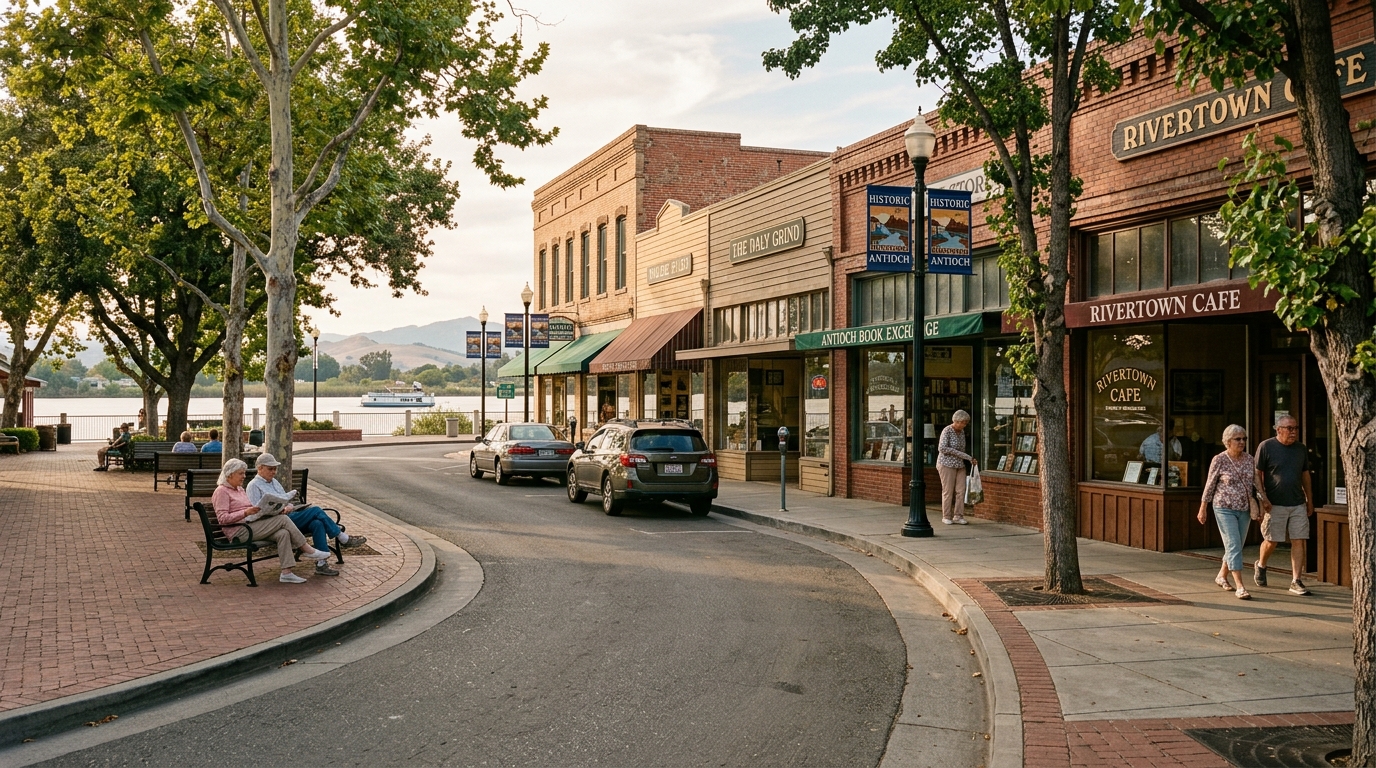
After the marina, walk or drive a short distance into the historic downtown grid. Rivertown works best when visitors combine the river with local storefronts, public art, civic spaces, and food. Business hours can vary, particularly early in the week, so check current listings before choosing a specific restaurant, café, shop, or service as the centerpiece of your visit.
Choose one locally owned place for lunch and leave time to browse nearby blocks. Supporting one business may seem small, but repeat local spending is exactly what helps a downtown district develop consistent foot traffic. Rivertown changes noticeably depending on the hour, weather, and calendar.
Use Waldie Plaza as a Downtown Landmark
Waldie Plaza is a helpful reference point in the downtown area and regularly appears in the city’s Rivertown event planning. Antioch’s Fourth of July celebration, for example, uses Waldie Plaza for live entertainment and local food vendors, with additional activities around City Hall. The plaza helps connect civic gatherings, commercial streets, and the waterfront.
When an event is scheduled, arrive earlier than you normally would. Street closures, temporary stages, food trucks, and crowds can change parking and walking routes. On ordinary days, it is a quieter starting point for exploring nearby blocks. Check the city calendar rather than relying on an old social media post, since event dates and operating plans can be updated.
Historic Rivertown also offers free public Wi-Fi across several city blocks. The city says visitors can select the “RivertownFreeWiFi” network and accept the terms without entering a password. Because it is an open public network, avoid banking, password changes, or other sensitive transactions while connected.
Plan for Heat, Parking, and a Flexible Schedule
Antioch summer afternoons can make exposed walking uncomfortable. Schedule longer walks for the morning, take an indoor lunch break, and return to the river later when the light is lower. Carry more water than you think you need, especially when visiting with children, older adults, or dogs. Never leave people or pets in a parked vehicle, even for a quick stop.
Do not build the day around finding the single closest parking space. A slightly longer walk can reduce circling and make it easier to explore several blocks. Read posted restrictions carefully, keep driveways and loading areas clear, and remove valuables from view. During festivals or city events, follow temporary signs and staff directions rather than assuming normal access will remain available.
A flexible itinerary prevents disappointment. A business may close, wind may increase, or a public area may be reserved. Prepare one backup option, such as a shorter waterfront walk, a different lunch stop, or a nearby park visit. The goal is to enjoy Antioch, not force an exact schedule when local conditions suggest a better plan.
Why Antioch’s Waterfront Matters in 2026
Rivertown is more than a place for photographs. It is part of an ongoing conversation about Antioch’s identity, economic development, public space, and connection to the Delta. The city has promoted a proposed Rivertown community space along the river, while public debate has continued over costs, design, development priorities, and the best use of valuable waterfront land.
Residents need not agree on one redevelopment plan to recognize the location’s importance. A welcoming waterfront can support small businesses, community events, recreation, and a stronger sense of place. At the same time, improvements must address maintenance, safety, accessibility, funding, and the everyday needs of people who already live and work downtown.
Visit Now, Then Stay Involved in What Comes Next
Form a useful opinion about Rivertown by visiting under normal conditions, not only during a festival or controversy. Walk the route, visit a business, note where shade and seating are available, observe how people move between downtown and the river, and identify barriers that affect families, boaters, seniors, cyclists, or people with disabilities.
Then follow official agendas, project pages, and public meetings when waterfront decisions come forward. Constructive feedback is more valuable when it is specific. Instead of saying downtown needs to be “better,” residents can comment on lighting, restrooms, public access, shade, parking, event infrastructure, landscaping, business visibility, or connections between the marina and commercial blocks.
For visitors, Antioch’s waterfront deserves more than a quick drive-by. It offers an accessible Delta setting, a historic downtown, active marina facilities, and a local story still being written. A thoughtful day in Rivertown can include nature, history, food, community space, and a clearer understanding of what makes Antioch different from other East Bay suburbs.
Start early, verify current hours, respect the working waterfront, support a local business, and leave room for an unscheduled pause beside the river. Rivertown is not finished—and that is precisely why visiting now is worthwhile.