
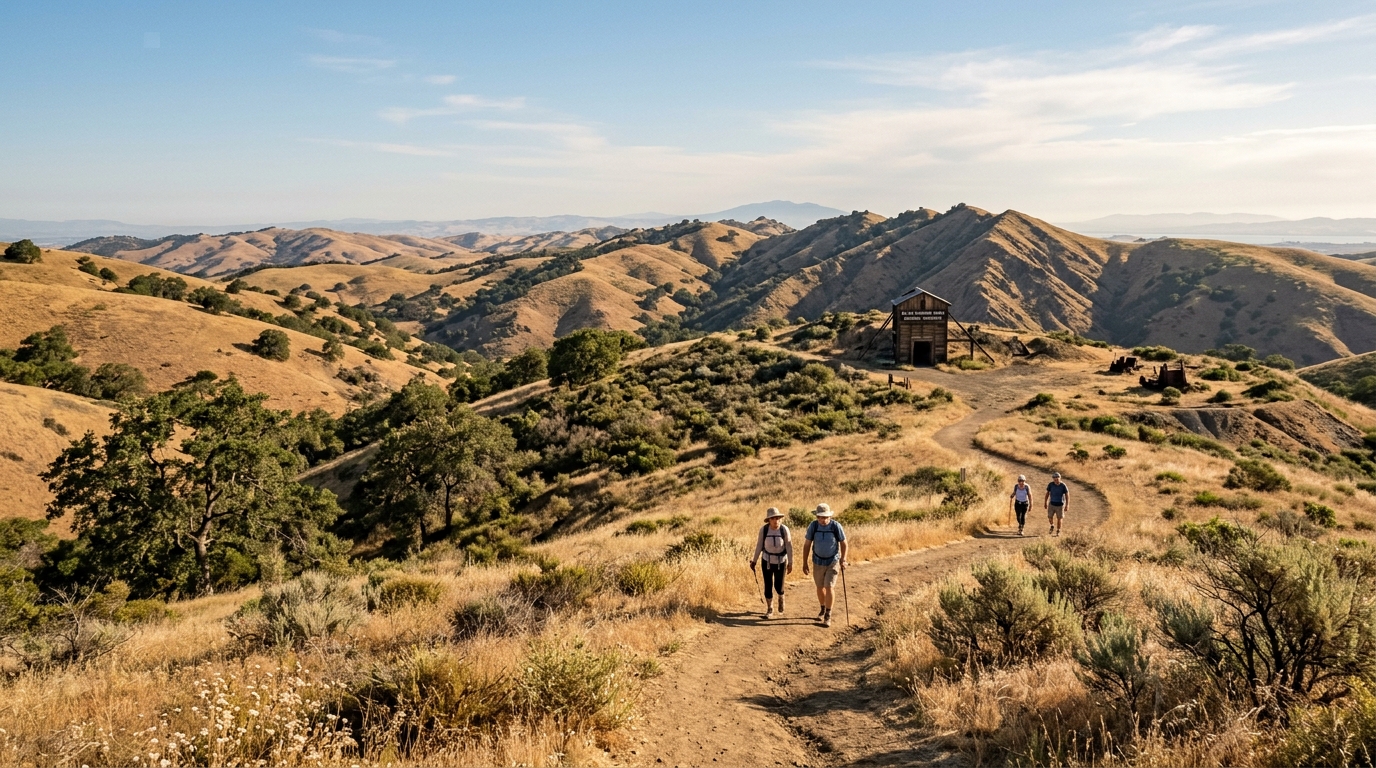
Black Diamond Mines Regional Preserve is one of Antioch’s most memorable outdoor destinations. Its rolling hills, historic mining sites, underground visitor center, wildlife, wildflowers, and extensive trail network create an experience that combines local history with serious open-space recreation.
The preserve is not a theme park or a casual roadside attraction. Reaching some destinations requires walking uphill, summer temperatures can become dangerous, mobile service may be unreliable, and underground mine access is strictly controlled. Visitors who arrive without checking hours or tour availability may discover that the trails are open while the visitor center or mine program is not.
This updated 2026 guide explains how to plan a visit, reserve the Coal Mine Experience, choose a realistic trail, explore Rose Hill Cemetery respectfully, and stay safe in Antioch’s inland hills. Conditions and programs can change, so use this article as a planning guide and confirm final details with the park district before leaving home.
Plan Your Visit to Black Diamond Mines Regional Preserve
Black Diamond Mines Regional Preserve is located at 5175 Somersville Road in Antioch. From Highway 4, take the Somersville Road exit and travel south toward the hills until reaching the main preserve entrance.
The preserve covers approximately 8,500 acres and contains about 65 miles of trails. That scale matters. A visit to the Greathouse Visitor Center is very different from a long hike through the Stewartville and Oil Canyon trail system. Decide whether your main goal is mining history, a family outing, wildflower photography, exercise, or a scheduled underground experience.
Check Hours, Fees, and Mine-Tour Reservations
The preserve generally opens at 8:00 a.m., but closing times change throughout the year. The published 2026 schedule lists a 5:00 p.m. closing during much of winter, an 8:00 p.m. closing between early April and early September, and intermediate closing times during spring and fall.
Do not use sunset as your deadline. Visitors and vehicles must leave before the posted gate-closing time. Check the official East Bay Regional Park District Black Diamond Mines page on the morning of your trip for alerts, weather-related closures, fire restrictions, program changes, and exact seasonal hours.
Greathouse Visitor Center Hours and Parking
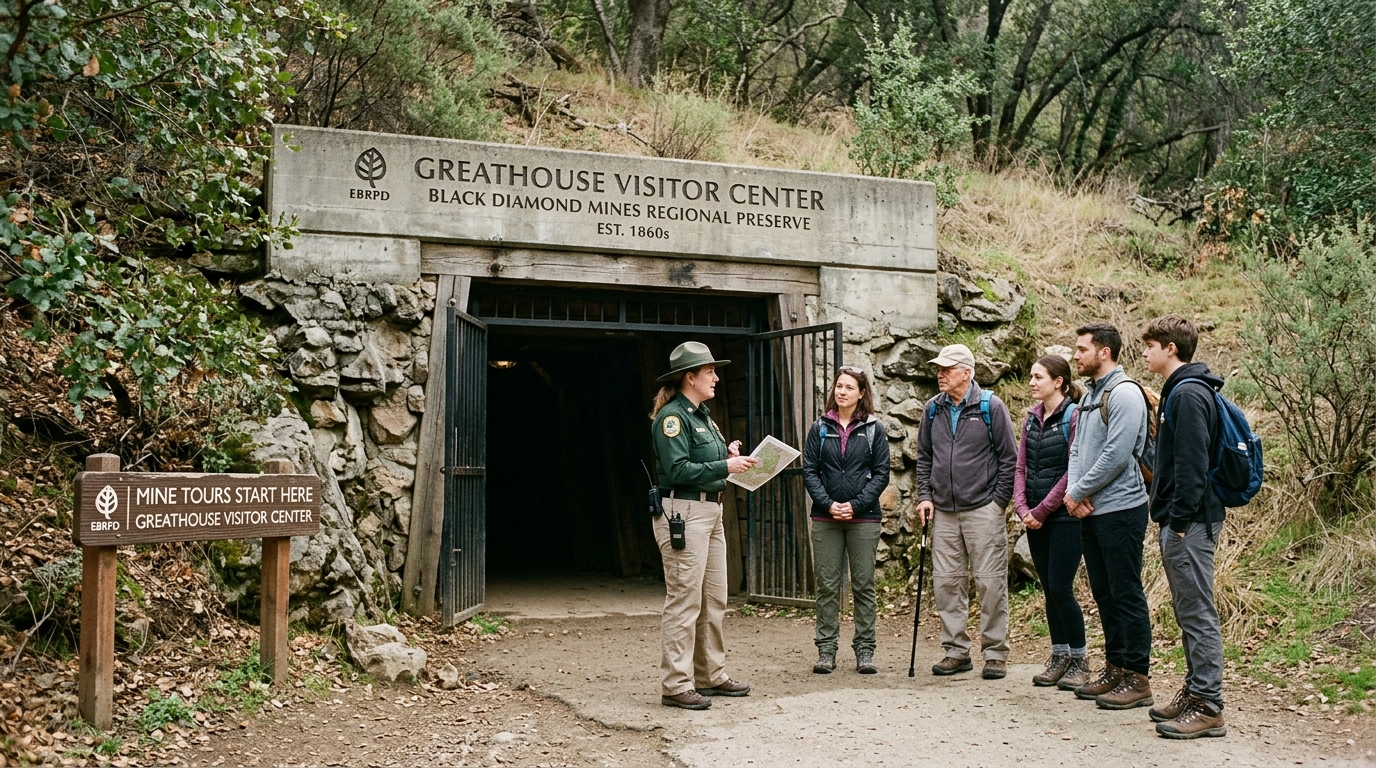
The Greathouse Visitor Center is currently open on Fridays from 10:00 a.m. to 2:00 p.m. and Saturdays and Sundays from 10:00 a.m. to 4:00 p.m. Admission to the center is free. A $5 vehicle parking fee is collected when the entrance kiosk is attended, generally on seasonal weekends and some holidays. Separate rates apply to trailered vehicles and buses.
The visitor center is located inside an underground chamber created during the twentieth-century sand-mining period. Exhibits, photographs, mining tools, and interpretive displays explain how coal and silica-rich sand were extracted from the surrounding hills.
Reaching the center requires walking approximately one-quarter mile beyond the upper parking lot. The route is partly paved and partly gravel, with some incline. The center itself is wheelchair accessible, and the upper parking area includes accessible restrooms and a water fountain. Visitors who need a specific accommodation should contact the park at least one week ahead.
How to Book the Coal Mine Experience
The Coal Mine Experience is offered on Saturdays and Sundays throughout the year, subject to the official event schedule. The program lasts approximately 30 minutes and follows a roughly one-quarter-mile underground route over hard-packed dirt.
Participants learn how coal formed, examine exposed sediment layers, and explore exhibits showing the dangerous conditions faced by nineteenth- and early-twentieth-century miners. This is a supervised educational program—not unrestricted access to abandoned mine tunnels.
Advance reservations are strongly recommended because each session is limited to 15 participants and same-day openings may not be available. Participants must be at least seven years old. Current event listings show a $3 program fee per person, but verify the amount and available times during registration.
Wear closed-toe shoes with reliable traction. The underground environment may feel cool compared with the exposed hills, so carrying a light layer is useful. Visitors uncomfortable with confined spaces should review the program description before booking. Dogs are not permitted on the mine experience, although qualifying service animals may participate under park rules.
Choose a Trail That Matches the Weather and Your Experience
Black Diamond Mines contains routes for short historical walks, moderate hill hikes, mountain biking, horseback riding, and demanding backcountry-style outings. A trail that looks short on a map can still involve steep grades, exposed slopes, loose surfaces, and a difficult return climb.
Download the official map before arriving because public Wi-Fi is not available and cellular coverage may be inconsistent. Do not rely entirely on a phone app. Carry a saved map or printed copy, identify major junctions, and set a turnaround time before beginning.
A Practical First-Visit Route
First-time visitors primarily interested in history should focus on the upper parking area, Greathouse Visitor Center, nearby interpretive sites, and routes toward the former Somersville townsite and Rose Hill Cemetery. This creates a meaningful visit without committing to one of the preserve’s longest loops.
Very little remains of the former coal-mining towns, so interpretive signs are essential. Slow down at historical panels instead of treating the area as scenery between trail segments. The landscape becomes more understandable when visitors know that families, stores, schools, hotels, rail lines, and industrial operations once occupied these hills.
Rose Hill Cemetery should be approached as a burial ground rather than a photo prop. Stay on established paths, do not touch or lean on markers, keep voices low, and supervise children. The cemetery preserves evidence of the communities that lived around the mines, including workers and family members who died during epidemics, childbirth, mining disasters, and everyday life in an isolated industrial settlement.
Experienced hikers can explore longer routes through Nortonville, Stewartville, Oil Canyon, and surrounding ridgelines. However, these routes require more water, navigation awareness, and realistic fitness. Browse the Antioch parks and outdoor guides when comparing Black Diamond Mines with shorter local recreation options.
Summer Heat, Wildlife, and Trail Safety
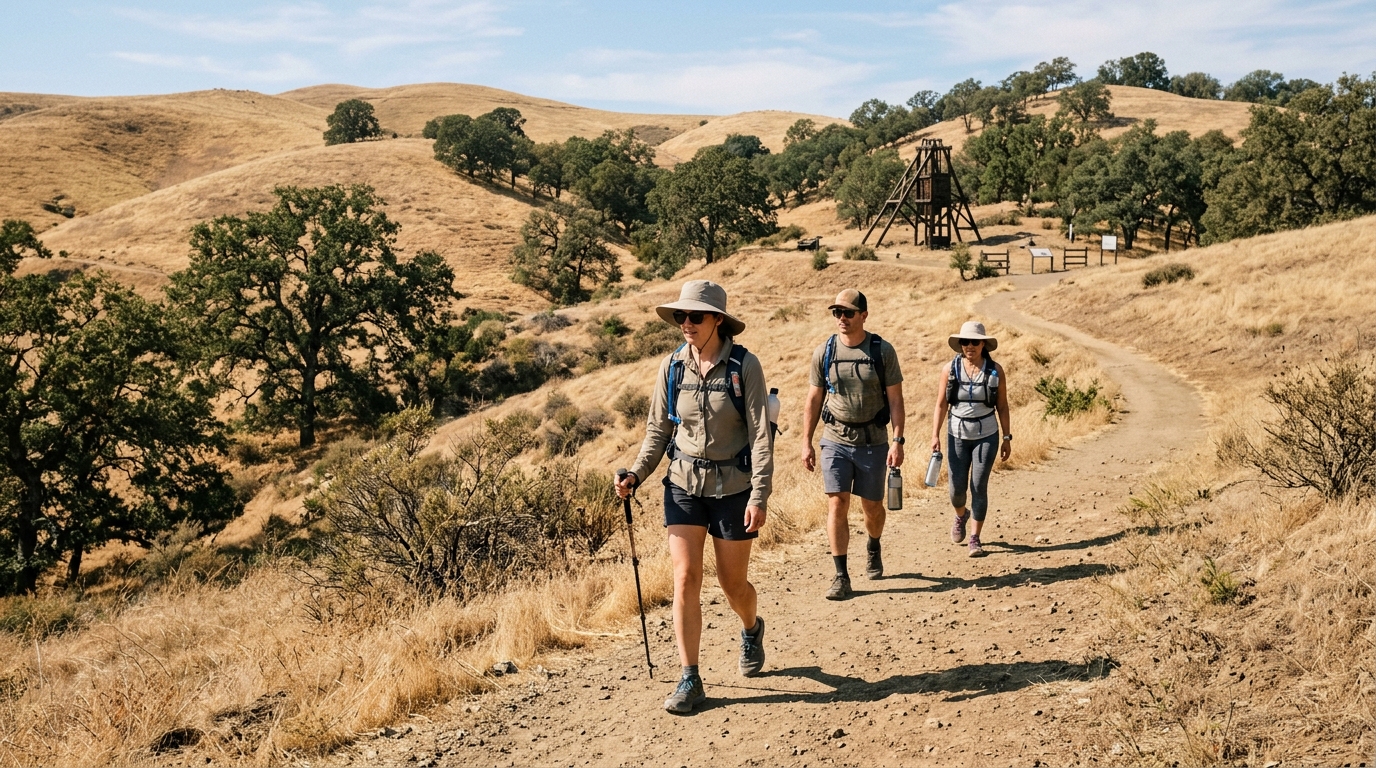
Summer and early fall can be extremely hot. Much of the preserve has limited shade, and temperatures in Antioch’s inland hills may feel more severe than conditions near the waterfront. Begin close to the 8:00 a.m. opening time, complete exposed climbs early, and turn back before anyone in the group becomes exhausted.
Bring more water than you expect to drink, along with sun protection, food, stable shoes, and a charged phone. Do not assume drinking water will be available throughout the trail system. Tell someone where you are going when attempting a longer route, particularly if hiking alone.
Coyotes and snakes are commonly seen, while deer, bobcats, foxes, mountain lions, golden eagles, and other wildlife also use the preserve. Give animals space, keep food secured, and never attempt to approach wildlife for a photograph. Watch where you place your hands and feet near rocks, brush, and warm trail edges.
Dogs must follow posted leash and access rules. Carry water for them and test the trail surface with your hand during hot weather. A route that is manageable for an adult may still be unsafe for a dog because of heat, distance, or rough ground.
Understand the History Behind Antioch’s Mining Landscape
Black Diamond Mines is not simply an abandoned industrial site. It contains evidence of several periods of California history, including Native American presence, ranching, coal extraction, immigrant labor, company towns, underground sand mining, regional development, and modern conservation.
Coal was discovered in the area during the nineteenth century, leading to the growth of five mining communities: Nortonville, Somersville, Stewartville, West Hartley, and Judsonville. Nearly four million tons of coal were eventually extracted from the district, helping power factories, mills, railroads, and riverboats around the growing Bay Area.
Coal production declined as other fuels became more practical. Mining later returned in another form when silica-rich sand was extracted for glass manufacturing and foundry use. The Greathouse Visitor Center occupies part of this later underground sand-mining system.
Combine Mining History With a Broader Antioch Day
A successful Black Diamond Mines visit does not need to include the longest trail. A morning mine program, visitor-center stop, historical walk, and picnic can provide a complete experience. Families with children under seven can skip the underground program and focus on outdoor sites and the visitor center during its operating hours.
After an early hike, visitors can continue to the Antioch waterfront and historic Rivertown for lunch, river views, and a less strenuous afternoon. The contrast between the dry mining hills and the San Joaquin River helps explain Antioch’s unusually varied landscape.
Black Diamond Mines also adds important context for anyone researching daily life in Antioch, California. The preserve protects a major open-space boundary, provides regional recreation, preserves local history, and gives residents access to a landscape that would be difficult to recreate after development.
Follow all fences, signs, and staff instructions. Never enter an unofficial mine opening, climb over a barrier, or leave the designated Coal Mine Experience route. Abandoned workings can contain unstable ground, vertical drops, poor air, and hazards that are invisible from the entrance.
Black Diamond Mines deserves time and preparation. Check current alerts, reserve underground programs early, choose a route suited to the weather, and treat historical places with respect. A well-planned visit reveals far more than attractive hills: it shows how Antioch’s natural landscape, labor history, industrial growth, and regional identity became connected.