
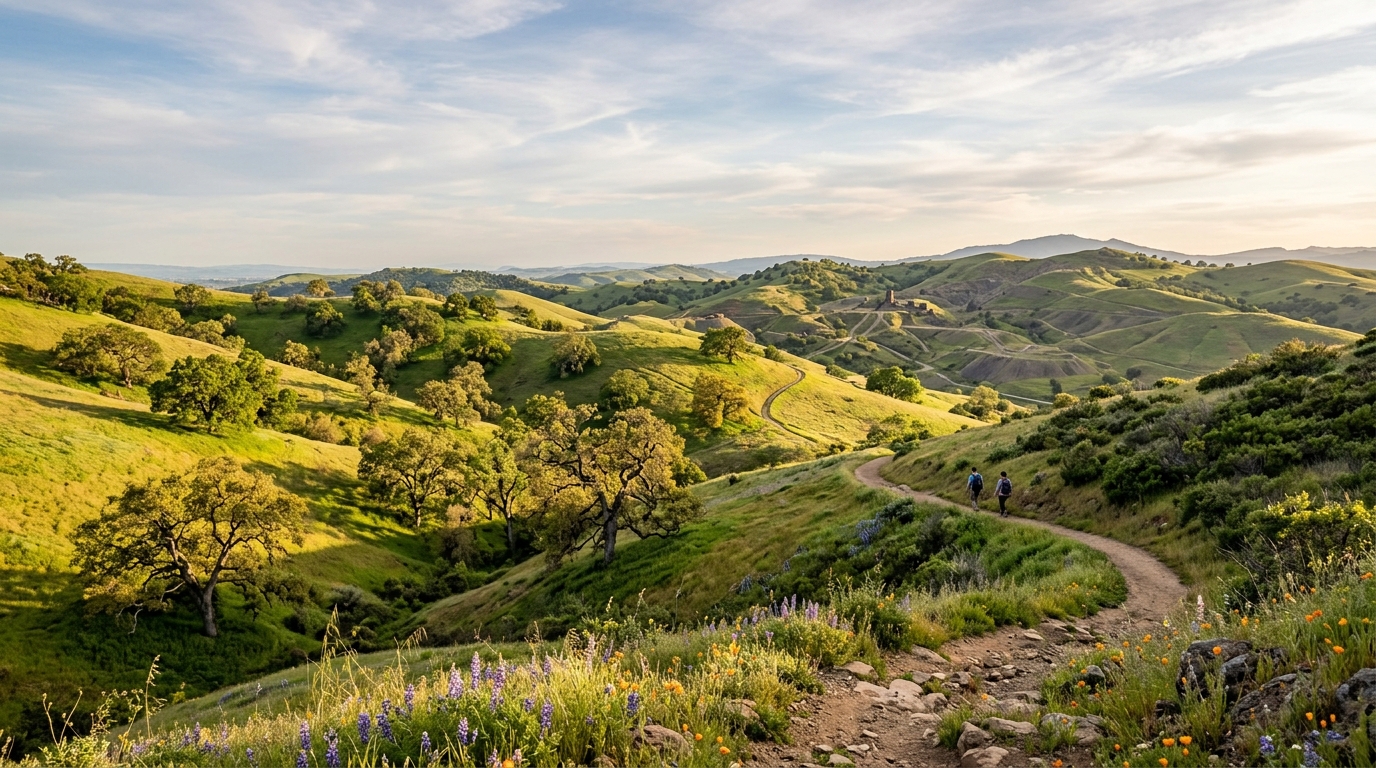
Black Diamond Mines Regional Preserve is one of Antioch’s most distinctive outdoor destinations. The preserve combines rolling East Bay hills, spring wildflowers, historic mining sites, long-distance trails, an underground visitor center, and stories from communities that once powered an important part of California’s early industrial growth.
It is also a place where preparation matters. Summer heat can be intense, many trails are exposed, mobile service may be unreliable, and underground access is controlled for safety. A successful visit starts with checking current hours, alerts, tour availability, and the distance between the parking area and the places you want to see.
This 2026 guide covers the practical details visitors need before heading to Black Diamond Mines, including seasonal gate hours, parking fees, the Greathouse Visitor Center, the Coal Mine Experience, trail choices, accessibility, dogs, and safety. Conditions and programs can change, so confirm final details with the East Bay Regional Park District before traveling.
Planning Your Visit to Black Diamond Mines in 2026
Black Diamond Mines Regional Preserve is located at 5175 Somersville Road in Antioch. The main entrance is reached by taking the Somersville Road exit from Highway 4 and driving south toward the hills. The preserve covers thousands of acres and contains an extensive trail network, so visitors should decide in advance whether the priority is hiking, mining history, a family outing, photography, or a scheduled underground experience.
Do not assume that entering the park and joining a mine program are the same activity. The open-space trails operate under the preserve’s seasonal gate schedule, while the visitor center and Coal Mine Experience have separate days and hours. A weekday hiker may find the trails open when the underground exhibits are closed.
Hours, Parking, and Essential Arrival Information
Park gate hours change throughout the year. In 2026, the preserve generally opens at 8:00 a.m., with closing times ranging from 5:00 p.m. in winter to 8:00 p.m. during the longer spring and summer days. Because seasonal dates are specific, visitors should verify the current schedule rather than relying on daylight alone.
A parking fee of $5 per vehicle is collected when the entrance kiosk is attended, typically on seasonal weekends and some holidays. Payment options can vary by location and staffing, so carrying a backup payment method is sensible. Arriving early is useful during popular spring weekends, naturalist programs, and mine-tour days.
What to Check Before Leaving Home
Review the official park page, activity calendar, map, and alerts on the morning of your visit. Heat, fire danger, storms, damaged trails, habitat protection, and maintenance work can change access with little notice. Black Diamond Mines is an inland hill park, so it can feel much hotter and drier than waterfront areas of Antioch.
Download the trail map before arriving because public Wi-Fi is not available and cellular coverage may be inconsistent. Tell someone your route if you plan a longer hike. Bring more water than you expect to need, sun protection, food, and a fully charged phone. Do not rely on the visitor center being open for basic supplies.
Best Seasons and Times of Day
Late winter and spring are usually the most comfortable periods for green hills, cooler hiking conditions, and seasonal wildflowers. Summer and early fall can be dry, exposed, and extremely hot. During warm weather, begin close to the 8:00 a.m. opening time, choose a realistic route, and turn back before heat or fatigue becomes a problem.
Photographers often prefer early morning or late-afternoon light, but visitors must be back outside the gate before closing. Winter visits can be beautiful, although rain may create mud and slippery surfaces. Check the forecast for Antioch rather than relying on conditions elsewhere in the Bay Area.
Greathouse Visitor Center and the Coal Mine Experience
The Greathouse Visitor Center is built inside an underground chamber excavated during the preserve’s sand-mining era. Exhibits, photographs, and artifacts explain both nineteenth-century coal mining and twentieth-century sand mining. In July 2026, the center’s published hours were Friday from 10:00 a.m. to 2:00 p.m. and Saturday and Sunday from 10:00 a.m. to 4:00 p.m.
Admission to the visitor center is free, although the normal vehicle parking fee may apply. From the upper parking lot, the center is approximately one-quarter mile away along a route that includes partially paved and gravel surfaces with some incline. The visitor center itself is wheelchair accessible, and accessible restrooms and a water fountain are available in the upper parking area.
How the Coal Mine Experience Works
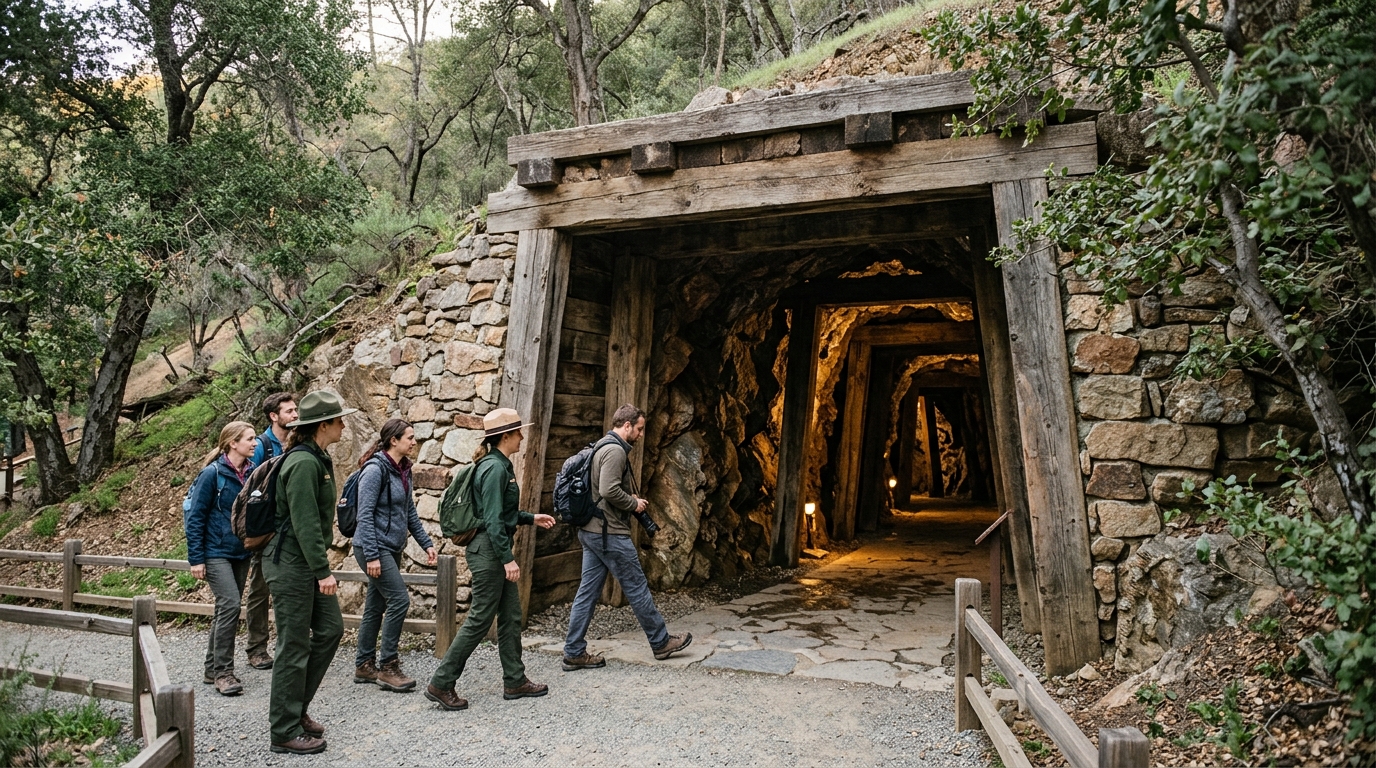
The Coal Mine Experience is a controlled underground program offered on Saturdays and Sundays. The approximately 30-minute experience allows visitors to examine rock layers and learn how coal mining shaped the area and supported growth around the San Francisco Bay. It is not unrestricted exploration of abandoned tunnels.
Advance registration is strongly recommended because each group is limited and same-day space may not be available. Participants must be at least seven years old. The route is approximately one-quarter mile, generally flat, and follows hard-packed dirt. Visitors should still wear stable closed-toe shoes and follow every instruction from park staff.
Mine access beyond the visitor center is permitted only through the official experience. Never enter closed tunnels, shafts, fenced areas, or unofficial openings. Historic mines can contain unstable ground, poor air, steep drops, and other hazards that are not obvious from the surface.
Accessibility, Children, and Dogs
Families should confirm the minimum age before booking. Younger children can still visit outdoor areas and the visitor center when it is open, but they cannot participate in the underground Coal Mine Experience. Parents should also consider whether a child is comfortable in enclosed spaces and can follow safety directions throughout the program.
Visitors who need an accommodation for the visitor center, exhibits, or mine program should contact the park at least one week in advance. Service animals are allowed on guided underground programs, but they should be comfortable with narrow passages and close proximity to people. Dogs on leash may enter the visitor center, but ordinary pets are not allowed on mine tours.
Trails, History, and Safety Inside the Preserve
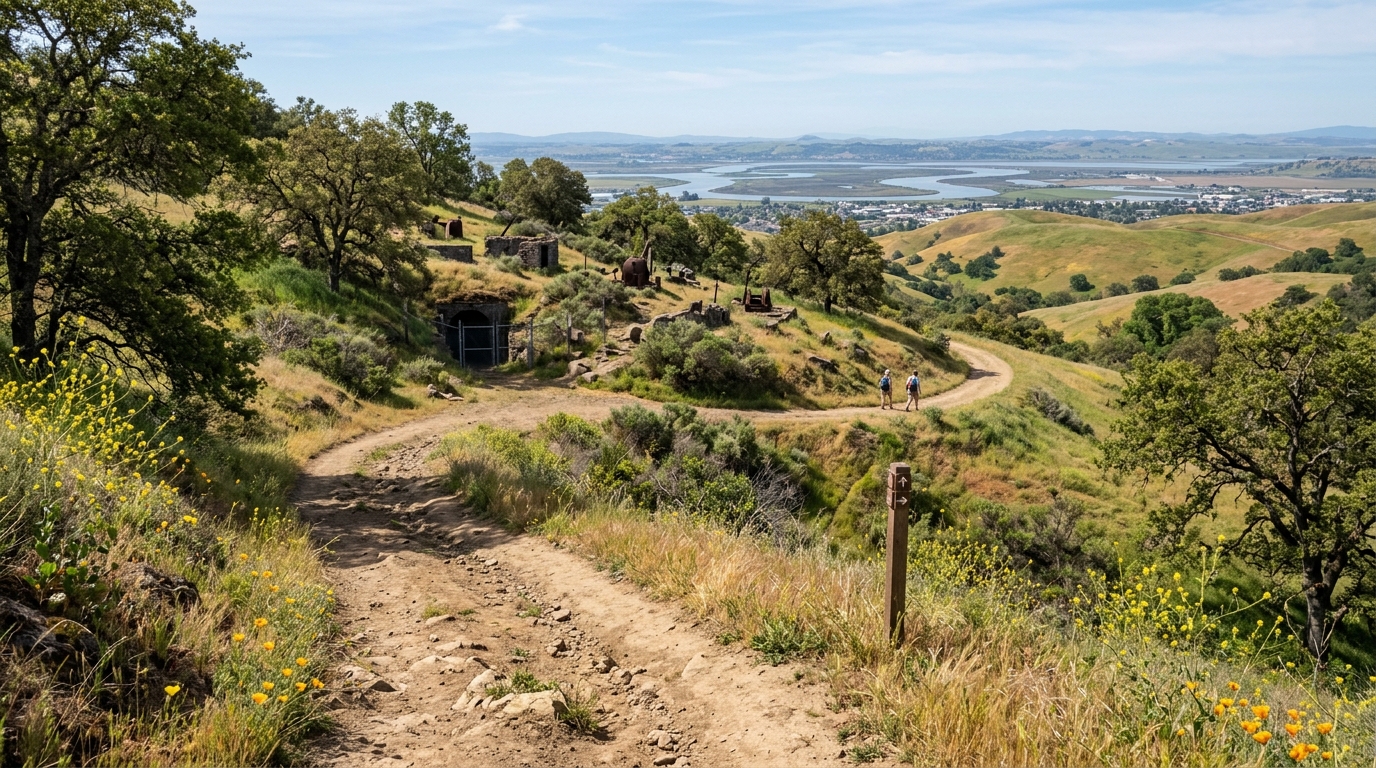
Black Diamond Mines is much larger than the visitor-center area. Its trail system passes grasslands, foothill woodland, chaparral, stream vegetation, historic townsites, mining features, and wide viewpoints over East Contra Costa County. Routes range from shorter walks near the main visitor area to demanding loops with major elevation gain.
First-time visitors should avoid choosing a route only by mileage. Elevation, heat, exposure, trail surface, water availability, and the return climb can make a modest distance harder than expected. Use the official map and trail signs, and choose a turnaround time before starting.
Choosing a Route That Matches Your Experience
Visitors focused on history can explore routes leading toward the Somersville and Nortonville townsites and Rose Hill Cemetery. Very little remains of the former mining settlements, so interpretive panels and the visitor center are essential for understanding what once stood in the hills. Rose Hill Cemetery is a sensitive historic place and should be treated respectfully.
More experienced hikers and mountain bikers can use longer loops across the preserve. The Park District lists a Black Diamond Mines bicycle loop of about 5.9 miles with substantial climbing, while one of its challenging hiking routes extends roughly 9.3 miles through the Stewartville and Oil Canyon trail system. These routes should not be treated as casual walks.
For a broader look at nearby outdoor choices, visit our Antioch parks and outdoors guide. Readers planning a full local weekend can also combine a morning hike with the Antioch waterfront and historic Rivertown, but leave enough recovery time after a hot or strenuous trail.
Black Diamond’s history deserves
Black Diamond’s history deserves more than a quick reference to abandoned mines. Five coal-mining towns once operated in the area, and nearly four million tons of coal were removed. Later, underground sand mining supplied material for glass manufacturing and foundry work. The preserve also reflects the earlier presence of Bay Miwok peoples, subsequent ranching, immigrant labor, industrial change, and the difficult lives of mining families.
Visitors can review current hours, reserve programs, and download the map through the official East Bay Regional Park District Black Diamond Mines page. Check the district’s alerts before every trip, even if you have visited recently.
Black Diamond Mines is one of the clearest examples of why Antioch’s identity extends beyond housing and commuting. The preserve connects landscape, labor history, recreation, education, and regional conservation. It also raises questions about how growth should coexist with open space, a subject discussed in our Antioch General Plan Update guide.
The best visit is not necessarily the longest. Choose a route that fits the weather and your experience, arrive prepared, reserve the mine program early, and leave enough time to return before the gate closes. With realistic planning, Black Diamond Mines can be a memorable introduction to Antioch’s hills and one of the most meaningful historic landscapes in the East Bay.