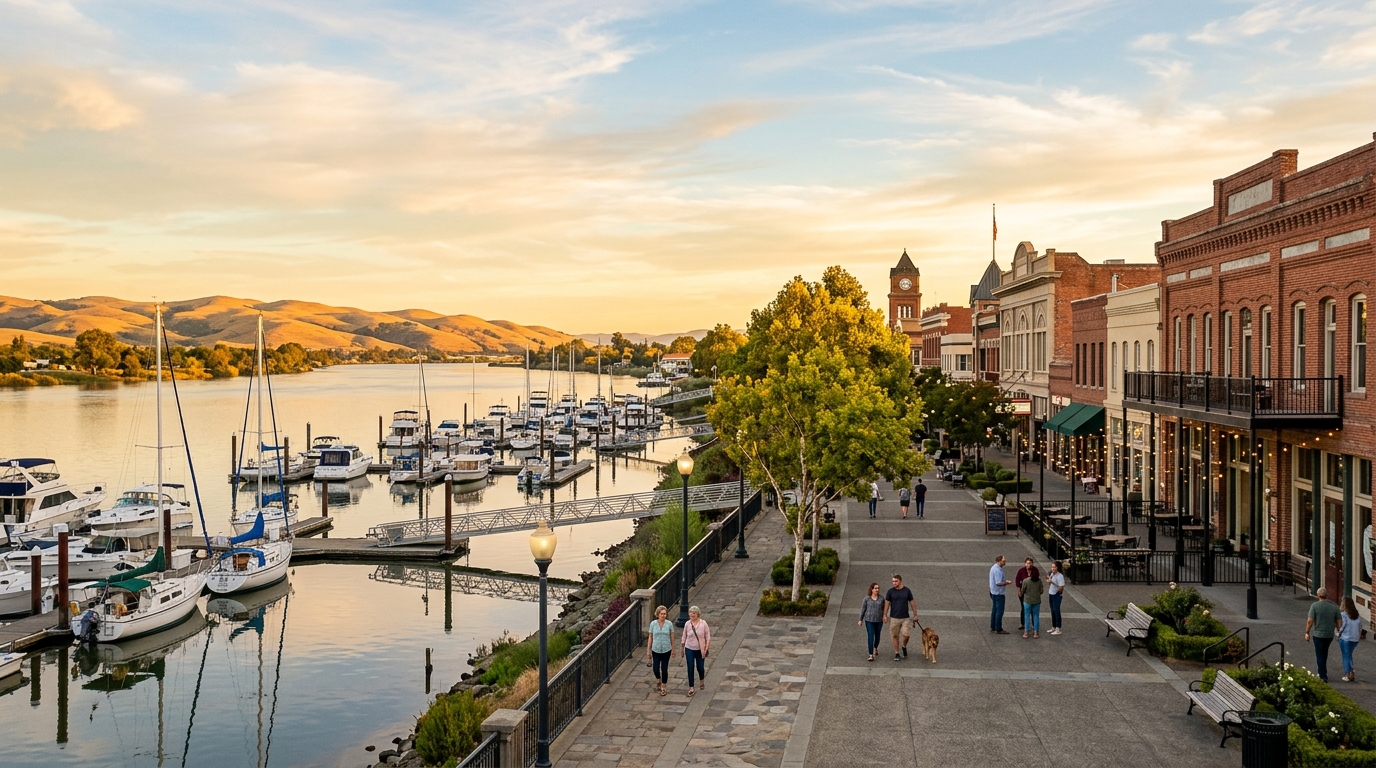
Antioch’s waterfront is one of the city’s strongest natural and cultural assets. Historic Rivertown places local businesses, public spaces, community events, municipal services, and Delta views within a compact part of the city. Yet the area’s future will depend on more than its scenery. Successful revitalization requires better public spaces, reliable maintenance, active storefronts, safe connections, useful events, and reasons for residents to return throughout the year.
Several recent developments have put new attention on the district. Antioch is gathering community ideas for a new outdoor Rivertown Community Space along the Sacramento–San Joaquin River. The city also launched free public Wi-Fi across several blocks of historic Rivertown in April 2026. These are not complete revitalization strategies by themselves, but they show that public-space quality and everyday visitor experience are becoming part of the local conversation.
This guide explains what is currently changing, what Rivertown needs to become a stronger destination, and how residents can judge future proposals without falling for unrealistic promises. It also connects the waterfront discussion to Antioch’s housing pipeline and comprehensive General Plan Update.
Why Antioch’s Waterfront and Rivertown Matter
Many cities would like to have a historic downtown beside a major river system. Antioch already has that combination. Rivertown offers older street patterns, independent businesses, public buildings, event spaces, waterfront access, and the nearby municipal marina. That gives the district a distinct identity that newer commercial corridors cannot easily reproduce.
The area matters economically because a memorable downtown can support restaurants, shops, services, cultural activities, and small events. It matters socially because public gathering places allow residents from different neighborhoods to share the same civic space. It matters environmentally and recreationally because the riverfront can connect people with the California Delta rather than leaving the shoreline visible but difficult to experience.
For readers considering living in Antioch, California, Rivertown is also an important test of how the city treats its history and public realm. A strong downtown does not need to imitate Walnut Creek, Oakland, or another Bay Area city. It needs to build on Antioch’s own riverfront setting, scale, businesses, and community traditions.
The Rivertown Community Space Could Create a New Civic Anchor
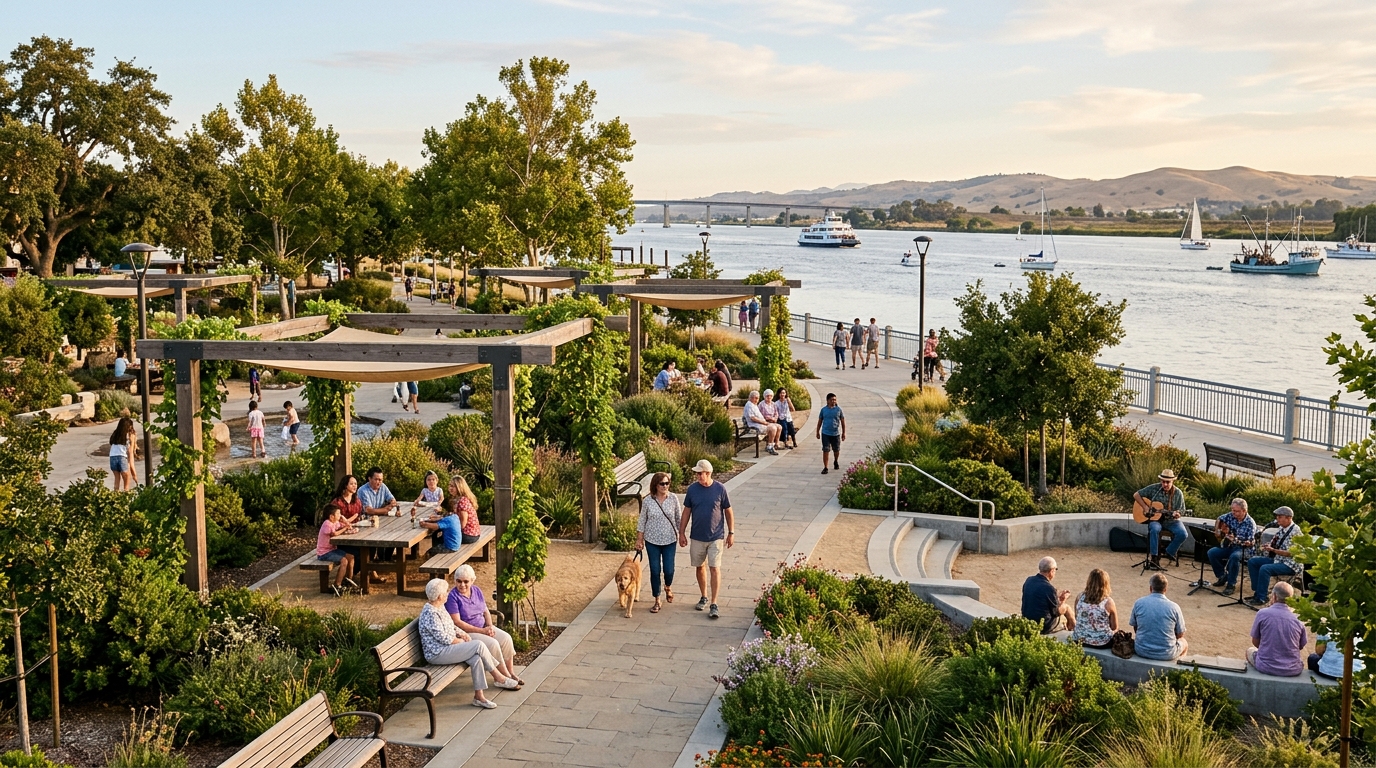
The City of Antioch is developing a new outdoor gathering place in Downtown Antioch and has invited residents to share ideas through a community survey and design workshops. The site is described as being along the Sacramento–San Joaquin River and intended to support a more vibrant downtown.
The most important question is not whether the project receives attractive landscaping. It is whether the final space is comfortable, flexible, safe, and active enough to become part of everyday life. A successful civic space should work for a family on an ordinary afternoon, a senior taking a break, a small community performance, a food event, and a larger seasonal gathering.
What a Useful Public Gathering Place Should Include
Shade should be treated as basic infrastructure, especially during Antioch’s hotter months. Seating should offer choices rather than a few decorative benches placed in direct sun. Paths should be accessible, lighting should support evening use, and the design should maintain clear sightlines without making the space feel empty or over-policed.
Flexible electrical access, water, waste collection, restrooms, bicycle parking, and loading arrangements can determine whether events are easy or expensive to organize. Landscaping should be durable and appropriate for the waterfront environment. Residents should also ask how the city will fund cleaning, repairs, security, programming, and long-term maintenance after the opening celebration.
Free Public Wi-Fi Is Helpful, but It Needs a Larger Visitor Strategy
Antioch launched Rivertown Free Wi-Fi in April 2026 across several downtown blocks. Free connectivity can help visitors access directions, event information, online menus, business websites, transportation details, and city services. It can also support vendors and residents who need basic internet access while in the district.
Wi-Fi works best when it supports a place people already want to spend time. It should be paired with clear wayfinding, clean public areas, comfortable seating, safe crossings, coordinated business information, and an updated online directory. The practical goal is not technology for its own sake. It is reducing friction for someone who arrives in Rivertown and wants to understand where to walk, eat, shop, park, attend an event, or reach the waterfront.
The Waterfront Needs Connections, Not Isolated Improvements
A renovated plaza, new event, or individual storefront can improve one location, but the district will feel successful only when people can move comfortably between its destinations. Visitors should be able to understand the relationship between Rivertown streets, Waldie Plaza, City Hall, the river, the marina, businesses, parking areas, and nearby neighborhoods.
This requires a connected public-realm strategy. Sidewalk quality, crossings, lighting, signs, landscaping, bicycle access, curb management, and waterfront visibility all influence whether people explore or leave after one stop. Small gaps can have large effects. An unclear route to the water or an uncomfortable crossing can make two nearby places feel disconnected.
The Marina Should Be Part of Rivertown’s Identity
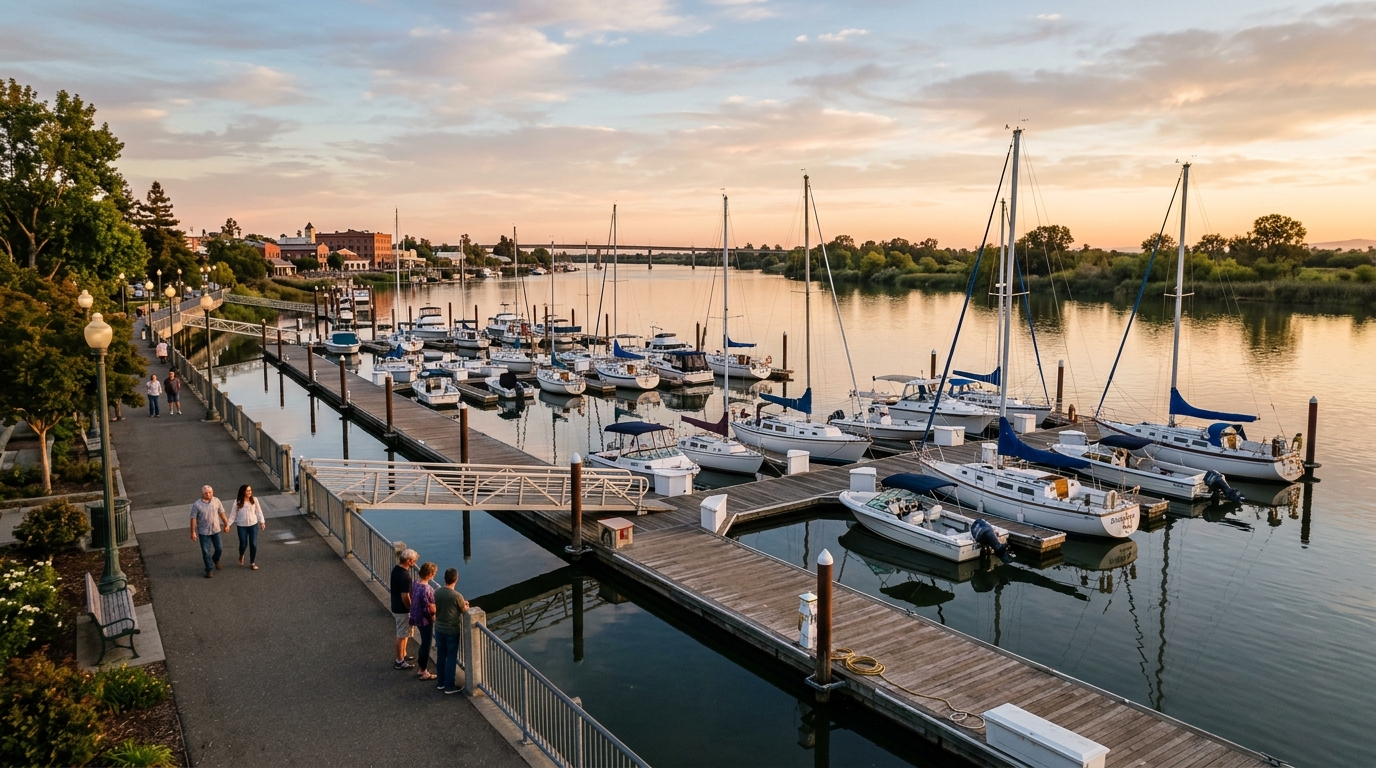
The Antioch Municipal Marina is a full-service facility with 310 slips, guest berthing, shore power, fresh water, restrooms, showers, and fuel service. It also provides access to Delta boating and fishing destinations. Those practical functions make the marina more than a scenic backdrop.
Future waterfront planning should consider how boaters connect with downtown businesses and how non-boaters experience the marina and riverfront. Clear pedestrian routes, local-business information, event coordination, public viewpoints, and safe access can help both areas reinforce one another. The city should avoid treating the marina, community space, and historic commercial streets as separate projects with no shared visitor experience.
Events Can Build Habits, but Regular Activity Matters More
Rivertown already hosts major community celebrations, including Antioch’s Fourth of July activities around Waldie Plaza and City Hall. Events introduce residents to the district and can generate valuable business traffic. However, occasional festivals cannot carry a downtown for the rest of the year.
Smaller recurring activities can be equally important: food events, outdoor performances, walking tours, youth activities, art displays, markets, history programs, and waterfront recreation. The best programming should complement existing businesses rather than competing with them. It should also be scheduled and promoted consistently enough that residents know when to return.
What Responsible Rivertown Revitalization Should Prioritize
“Revitalization” is often used as if every new project automatically benefits the community. In reality, downtown improvement involves trade-offs. More activity can support businesses and improve public safety through regular use, but poorly planned development can displace local operators, overwhelm parking, block waterfront access, or produce buildings that add units without adding a stronger public realm.
Antioch’s broader planning process creates an opportunity to connect Rivertown with citywide decisions. The Antioch General Plan Update will address long-term land use, transportation, safety, environmental conditions, and economic development. The city’s growing housing pipeline, covered in our Antioch housing growth guide, could also increase demand for local destinations and services.
A Practical Checklist for Residents and Decision-Makers
Residents should evaluate waterfront proposals by asking what problem each project solves and how it fits the district as a whole. A useful plan should produce visible benefits without relying on vague promises about future investment.
- Public access: Does the project make it easier to reach and enjoy the river?
- Local business support: Will it bring customers to existing operators and create realistic spaces for new ones?
- Year-round comfort: Are shade, lighting, seating, weather protection, and restrooms addressed?
- Safe connections: Can people walk or cycle between key destinations without confusing or uncomfortable gaps?
- Maintenance: Who will clean, repair, landscape, and manage the space after construction?
- Programming: Is there a credible plan for recurring activities rather than one opening event?
- Historic character: Does the design respect Rivertown’s scale and identity without turning history into a superficial theme?
- Waterfront resilience: Are flooding, heat, habitat, and long-term river conditions considered?
Residents can follow the official Rivertown Community Space project page, complete city surveys when they are available, review workshop materials, and watch relevant Planning Commission or City Council agendas. Comments are more effective when they identify a specific design need, maintenance concern, access problem, or community benefit.
Rivertown does not need one oversized project to prove its value. It needs a sequence of coordinated improvements that make the district easier to use, more comfortable to visit, and more supportive of local life. The new community space and public Wi-Fi can contribute to that future, but their success will depend on how well they connect with businesses, events, the marina, public access, and long-term city planning.
The strongest vision is straightforward: protect what makes Rivertown distinct, improve the basics, create reasons to return, and keep the waterfront genuinely public. If Antioch follows that approach, the district can become more than a place residents visit for a major event. It can become an everyday civic destination that reflects the city’s history and its future.